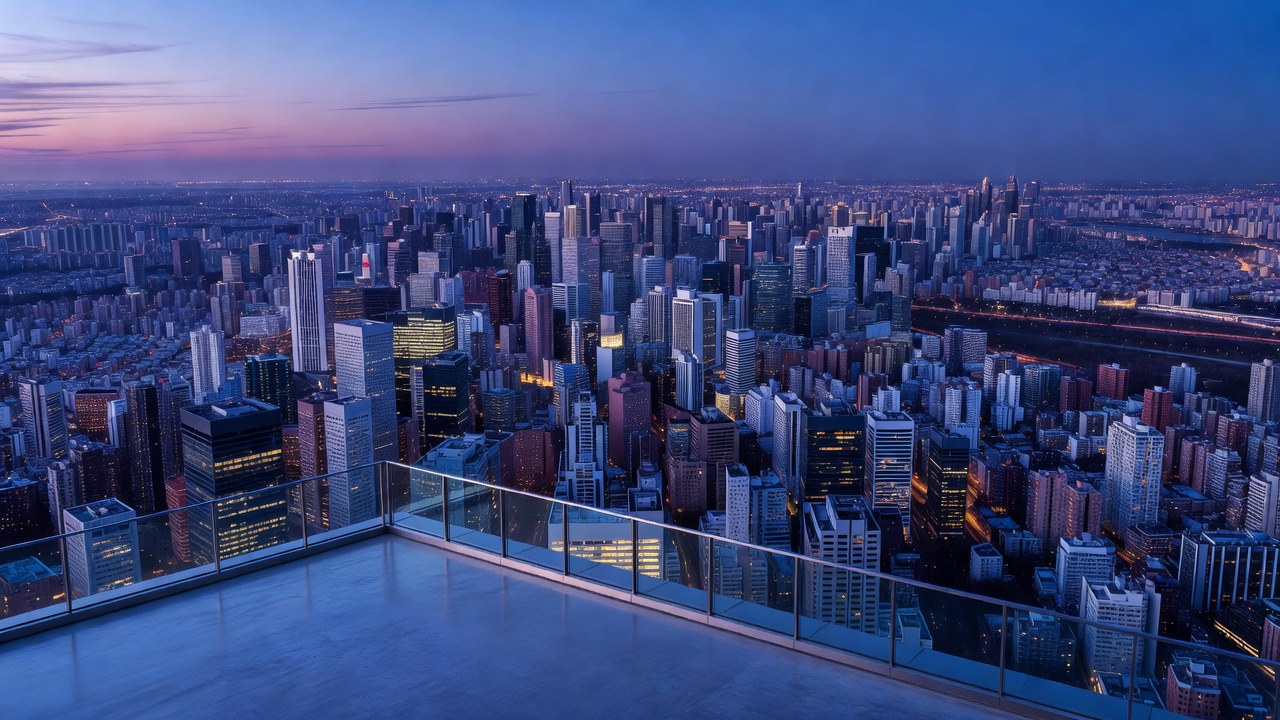
What counts as a workable overlook
An urban overlook is any elevated public place with a stable stance and a clear visual corridor into the city fabric: bridges with pedestrian decks, hill parks, waterfront promenades with height, multi-level concourses, and paid observation levels where photography rules are explicit. The category fails when the view is high but interrupted by visual noise you cannot crop—billboard backs, crane clutter without structure, or glass reflections you cannot manage.
Prioritise locations that offer a geometric relationship: a river bend aligning towers, a street axis vanishing toward a lit cluster, or a layered near-roof / mid-rise / distant skyline stack. Pure panoramas from random roofs are less useful if you cannot stand there lawfully. Trespass is not a creative technique; it is a risk to safety, to property access for everyone else, and to your work’s credibility.
Access, rules and neighbourliness
Read posted rules for tripods, commercial use and opening hours. Some parks lock gates; some bridges discourage monopods in tight lanes; some private-public spaces allow handheld photography only. Security staff respond better to compact setups that do not block circulation. Keep bags against walls, not in walkways. Avoid mounting gear on railings in a way that overhangs roads or water, and never encourage others to climb past barriers for a vantage.
Sound and light discipline matter at night. Bright screens, loud group instructions and repeated flash near residential facades create friction. If a space is primarily a transport connection, treat photography as secondary to movement. When a location is crowded at peak blue hour, arrive earlier to claim a safe stance, or pick a side angle that still holds the skyline without elbow competition.
Blue hour, night balance and timing
Urban overlooks often peak when residual sky luminance balances artificial lights—commonly a short window after sunset, lengthening or shortening with cloud and season. Too early and buildings feel dull under bright sky; too late and the sky collapses to black while windows blow into speckled highlights. Scout once in daylight to lock composition, then return with a timed plan rather than discovering framing while the window closes.
Mixed colour temperatures are normal: cool sky, warmer sodium or mixed LEDs. Decide whether you want a unified white balance or a deliberate split. Long exposures smooth traffic into lines and can calm water; they also invite vibration from footsteps on bridges. Use a sturdy stance, shield from wind between towers, and time shutters between heavy vehicle passes when structure shake is visible.
Railings, glass and foreground management
Railings are both safety and obstacle. Shooting through mesh requires care to avoid moiré and blurry obstruction—get lens elements as close as safety allows, stop down thoughtfully, and watch for flare from nearby lamps. Glass barriers add reflections; a rubber lens hood pressed carefully (without forcing anything) can reduce stray light paths, but only where doing so does not damage surfaces or break rules.
Foreground architecture can be a gift: parapet lines, patterned floors, sculptural planters. Use them to anchor scale. If the near field is pure clutter, raise your camera height legitimately or change position rather than leaning into unsafe space. Include a human-scale element occasionally—distant pedestrians or trains—to keep skyscrapers from reading as abstract models without weight.
Lenses and compositional restraint
Wide angles on overlooks can tip verticals aggressively; correct carefully or lean into controlled convergence if it serves the design. Standard and short-telephoto lenses isolate tower relationships and reduce the amount of empty lower city that dilutes attention. Horizontal frames suit river cities with lateral spread; vertical frames can emphasise stacked height when a single corridor of buildings leads the eye upward.
Beware the “everything lit” compulsion. Selecting a quieter pocket of the skyline—warehouse waterfronts, a bridge span, a single illuminated civic block—often yields clearer stories than maximum density. Weather helps: light rain intensifies pavement reflections; haze separates planes; fast clouds add motion above static towers. Clear dry nights are crisp but can feel clinical if composition lacks a near anchor.
Pros, cons and when to pick another category
Pros: repeatable access without mountain logistics; strong night luminance; graphic lines from infrastructure; useful four-season potential; short travel times for many photographers.
Cons: legal and social constraints; vibration and crowds; light pollution reducing sky detail; security misunderstandings; rapidly changing temporary construction that breaks planned alignments.
Choose urban overlooks when architecture, infrastructure and controlled night light are your subjects. Choose mountain viewpoints for weather-led landform depth. Choose woodland when you need shelter and organic layering. Revisit overlooks after major seasonal tree cover changes or new tower lighting schemes—cities redraw themselves more often than cliffs do.
A compact night workflow
Day scout for corridors and stance. Note railing types and trip hazards. Pack minimal glass, spare batteries, and a small light for bag work that will not sweep across other people’s faces. Shoot a daylight reference, a blue-hour primary set, and a later night variant if the location remains open and safe. Review histograms for clipped signage and headlights. Leave the space cleaner than you found it, and record any rule changes for your next visit notes.
At Mediamiclipcottag we treat city height as a permissions-first craft. The overlook that welcomes you back is more valuable than a one-time angle that relied on ignoring boundaries.